Capability
What the bench can take on
Trade buyers choose a repair supplier on risk, not on price. So this page is the boring detail: what fits through the door, how it gets tested, and what happens if a repair does not hold.
Bench capacity
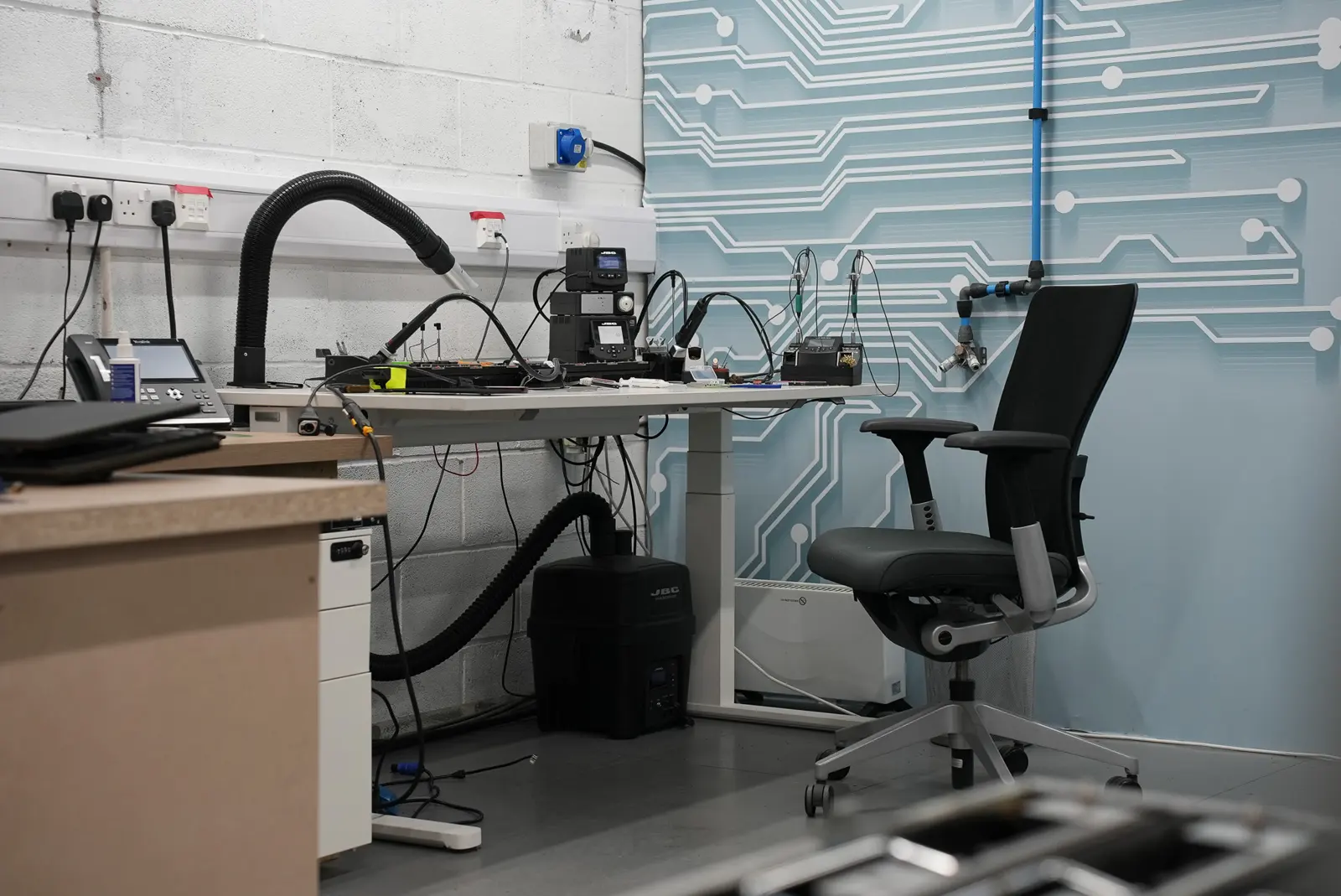
Four disciplines run in the same workshop, which is the whole point of CPS: a rental house sending LED modules, moving heads and an amplifier rack deals with one supplier and one report format. Volume work such as module batches and spares testing is planned in rather than squeezed between jobs.
Test facilities
Everything is tested under conditions that resemble the job, not on a bench at low level for thirty seconds. Amplifiers and speakers are run under load, fixtures are run through a full home and movement cycle, and LED modules are run on a live processor at brightness. We test twice: once after repair and once before it is packed.
Turnaround
Turnaround is confirmed after diagnosis rather than promised before it, because a number given before anybody has opened the unit is a guess. Care plan clients hold agreed targets and jump the queue.
Warranty
Repairs are warranted on the work carried out and the parts we fitted. If a repair does not hold, it comes back to us and we deal with it. What we do not warrant is the rest of a unit we were not asked to touch, and we say which is which on the report.
Every unit leaves with a repair report naming the fault found, the work done and the test result. The pattern we see is that the report matters most months later, when somebody is deciding whether that unit is worth keeping.